

Threads of Tradition,
Crafted with Heritage
Discover the timeless handicrafts and weaving traditions of Sikkim, where skilled artisans transform wool, bamboo, wood, and natural fibers into masterpieces that reflect the culture, creativity, and identity of the Himalayan communities.

Handicrafts that Preserve Himalayan Heritage
Handicrafts and weaving have long been an essential part of Sikkim's cultural identity. Passed down through generations, these traditional skills combine artistic expression with everyday utility. From beautifully handwoven carpets and vibrant Lepcha textiles to intricately carved wooden artifacts and colorful Thangka paintings, every creation reflects the rich heritage of the Himalayan communities.
Different ethnic communities of Sikkim—including the Lepcha, Bhutia, Nepali, Limboo, and Tamang people—have developed unique craft traditions inspired by their lifestyles, religious beliefs, and natural surroundings. Local artisans use wool, bamboo, cane, wood, clay, and natural dyes to produce handmade items that remain both culturally significant and environmentally sustainable.
Today, Sikkim's handicrafts continue to support local livelihoods while attracting travelers seeking authentic souvenirs and cultural experiences. Visiting craft centers and local markets offers a wonderful opportunity to appreciate the skill, patience, and creativity behind every handmade piece.
Explore Traditional CraftsHandicrafts & Weaving at a Glance
Everything you should know before exploring Sikkim's traditional crafts.
Traditional Heritage
The handicrafts of Sikkim represent centuries-old artistic traditions preserved by local communities through family-based craftsmanship and cultural practices.
Natural Materials
Most handmade products use locally available wool, bamboo, cane, wood, cotton, silk, and natural plant-based dyes, making them eco-friendly and sustainable.
Popular Souvenirs
Handwoven carpets, Thangka paintings, bamboo baskets, wooden masks, prayer flags, and traditional textiles are among the most sought-after souvenirs.
Government Support
Various government institutes and handicraft centers promote artisan training, quality improvement, and preservation of traditional weaving techniques.
Best Shopping Places
Gangtok, Namchi, Ravangla, Pelling, and local handicraft emporiums offer authentic handmade products directly from skilled artisans.
Perfect Cultural Experience
Visitors can explore weaving centers, artisan workshops, and handicraft exhibitions to witness traditional craftsmanship in action.
The Finest Handicrafts of Sikkim
Sikkim's traditional handicrafts beautifully reflect the creativity, culture, and heritage of its diverse communities. Every handmade piece carries generations of craftsmanship and represents the harmonious relationship between people, nature, and tradition.

Handwoven Carpets
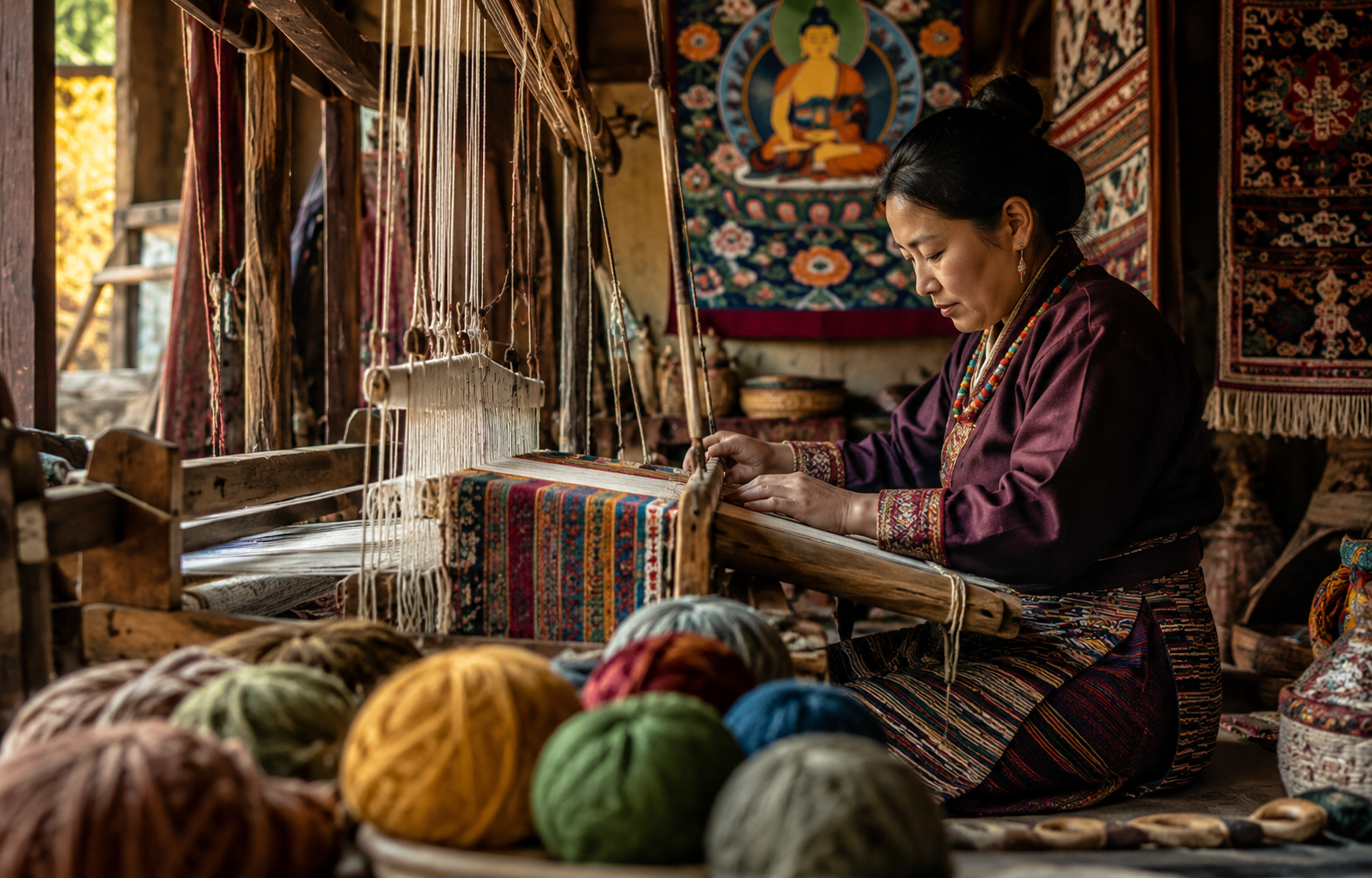
Handwoven woolen carpets are among the most celebrated handicrafts of Sikkim. Crafted primarily by Bhutia artisans, these carpets feature intricate Tibetan-inspired motifs such as dragons, lotus flowers, snow lions, and geometric patterns. Every carpet is woven by hand using traditional looms, making each piece unique. Besides enhancing the beauty of homes and monasteries, these carpets represent centuries of weaving expertise passed down through generations.

Thangka Paintings
Thangka paintings are sacred Buddhist artworks created on cotton or silk using natural mineral pigments and gold detailing. These paintings portray Buddhist deities, mandalas, spiritual teachers, and important religious symbols. Every Thangka is carefully handcrafted following strict artistic and spiritual guidelines, making it both a devotional object and an extraordinary work of art admired around the world.

Bamboo & Cane Crafts
Sikkim's forests provide abundant bamboo and cane, enabling artisans to create beautiful baskets, trays, mats, furniture, storage containers, lamps, and decorative items. These handcrafted products combine durability with sustainability, making bamboo craft one of the most environmentally friendly traditional industries in the state.

Wood Carving
Wood carving has flourished in monasteries and local communities for centuries. Skilled craftsmen create beautifully carved doors, windows, furniture, prayer wheels, masks, statues, and decorative panels featuring Buddhist motifs, floral patterns, and mythical Himalayan creatures. Each carving showcases remarkable precision and artistic excellence.

Handmade Jewellery
Traditional jewellery in Sikkim reflects the cultural identity of different ethnic communities. Silver ornaments, coral beads, turquoise stones, yak bone accessories, and handcrafted necklaces are commonly worn during festivals and ceremonies. Many pieces combine spiritual symbolism with elegant Himalayan craftsmanship.

Lepcha Handloom
The Lepcha community is renowned for producing beautifully woven textiles featuring vibrant stripes and geometric patterns. Traditional backstrap looms are still used to weave scarves, shawls, bags, and ceremonial fabrics. These textiles preserve one of the oldest weaving traditions in the Eastern Himalayas.
The Rich Weaving Heritage of Sikkim
Weaving is deeply rooted in Sikkim's cultural traditions. Every community has developed unique textile designs, weaving techniques, and color combinations that reflect their identity, beliefs, and relationship with nature.

Bhutia Carpet Weaving
Bhutia carpet weaving is one of Sikkim's most respected traditional crafts. Artisans use high-quality sheep wool to create thick, durable carpets decorated with dragons, snow lions, lotus flowers, and traditional Buddhist motifs. These carpets are valued both for their artistic beauty and practical warmth.

Backstrap Loom Weaving
Lepcha women continue the centuries-old tradition of weaving using portable backstrap looms. This technique allows intricate patterns to be created entirely by hand. The finished textiles include scarves, shawls, ceremonial dresses, and decorative fabrics admired for their vibrant colors.

Eco-Friendly Dyeing
Traditional weavers have long relied on natural dyes extracted from leaves, flowers, bark, roots, and minerals. These eco-friendly colors produce soft earthy shades while preserving environmentally sustainable weaving practices that have been followed for generations.

Traditional Costumes
Many traditional garments worn during festivals and religious ceremonies are handwoven locally. Dresses such as the Bakhu, Dumvum, shawls, waistbands, and ceremonial scarves highlight the weaving skills of Sikkim's artisan communities while preserving their cultural identity.

Contemporary Handloom
Modern artisans blend traditional weaving methods with contemporary designs to create fashionable stoles, table runners, handbags, cushion covers, and home décor products. These innovations help preserve traditional skills while meeting today's market demands.

Passing Skills Across Generations
Weaving remains a family tradition in many villages, where knowledge is shared from parents to children. Community weaving centers and government-supported training institutes continue to encourage younger generations to preserve these invaluable artistic traditions.
Natural Materials Behind Every Masterpiece
The beauty of Sikkim's handicrafts lies not only in the craftsmanship but also in the sustainable materials sourced from the Himalayan landscape. Local artisans carefully select natural resources that ensure durability, elegance, and environmental harmony.
Wool
High-quality sheep wool is widely used to weave Sikkim's famous carpets, blankets, shawls, and winter textiles. The natural warmth, softness, and durability of Himalayan wool make it the preferred material for traditional weaving. Skilled artisans clean, spin, dye, and weave the wool entirely by hand using age-old techniques.
Bamboo & Cane
Bamboo and cane grow abundantly across Sikkim and provide sustainable raw materials for baskets, furniture, trays, storage containers, lamps, decorative pieces, and utility products. Their flexibility and strength make them ideal for both traditional craftsmanship and modern home décor.
Himalayan Timber
Locally sourced timber is transformed into beautifully carved furniture, monastery decorations, masks, statues, prayer wheels, and architectural elements. Master craftsmen carefully carve intricate Buddhist symbols and floral motifs while preserving the natural beauty of the wood.
Natural Dyes
Traditional artisans prepare dyes from flowers, tree bark, roots, herbs, leaves, and minerals. These eco-friendly colours create soft earthy tones while maintaining centuries-old sustainable weaving and painting practices.
Silk & Cotton Canvas
Thangka paintings are created on carefully prepared cotton or silk fabric before being painted with natural mineral pigments and gold detailing. The quality of the canvas ensures these sacred artworks remain preserved for generations.
Stone, Coral & Turquoise
Traditional jewellery incorporates semi-precious stones, coral beads, turquoise, silver, and yak bone to create elegant ornaments worn during festivals, ceremonies, and religious celebrations throughout Sikkim.
How Traditional Handicrafts Are Created
Every handcrafted product reflects patience, skill, and dedication. From selecting raw materials to the final finishing touches, artisans spend days or even months creating a single masterpiece.
Selecting Nature's Finest Resources
Artisans begin by collecting locally available raw materials such as sheep wool, bamboo, cane, timber, cotton, silk, clay, and natural colouring agents. Every material is carefully selected based on quality, durability, and suitability for the intended craft.
Cleaning, Processing & Dyeing
Raw materials are cleaned, dried, spun, polished, or treated before use. Wool is spun into yarn, bamboo is cut and cured, wood is seasoned, while natural dyes are prepared from herbs, bark, flowers, and minerals to achieve vibrant colours.
Handcrafting Every Detail
Using traditional tools and techniques passed down through generations, artisans weave textiles, carve wood, paint Thangkas, shape bamboo products, and assemble intricate handicrafts. Every step is completed manually with exceptional precision.
Decoration & Quality Inspection
Completed products undergo careful polishing, embroidery, painting, trimming, or decorative finishing before being inspected for quality. This ensures every handcrafted item meets traditional standards while preserving its artistic value.
The Destruction of the Torma
Most Cham performances culminate in the ritual destruction of a Finished handicrafts are displayed in government emporiums, village markets, handicraft exhibitions, monasteries, and local shops. Every purchase supports artisan families while helping preserve Sikkim's rich cultural traditions for future generations.
Where to Buy Authentic Handicrafts in Sikkim
Visitors can discover genuine handmade products across Sikkim at government emporiums, village markets, artisan workshops, monasteries, and annual cultural fairs.
Government Handicraft Emporiums
These outlets offer certified handmade carpets, textiles, bamboo products, wooden artifacts, Thangka paintings, and souvenirs produced by registered artisans from across Sikkim.
MG Marg, Gangtok
The popular shopping street features numerous stores selling authentic local handicrafts, traditional clothing, jewellery, prayer flags, carpets, and handcrafted souvenirs.
Village Artisan Workshops
Many villages welcome visitors to observe traditional weaving and handicraft making while purchasing products directly from the artisans who create them.
Festivals & Craft Fairs
Annual cultural festivals and handicraft exhibitions showcase the finest handmade creations from different communities, providing excellent opportunities to support local artisans.
Explore the Beauty of Sikkim's Handmade Heritage


Frequently Asked Questions
Sikkim is famous for handwoven carpets, Lepcha textiles, Thangka paintings, bamboo and cane products, wooden carvings, handmade jewellery, traditional masks, prayer flags, and beautifully woven woollen fabrics.
The Lepcha and Bhutia communities are especially known for their traditional weaving skills. Lepcha artisans create colorful handloom textiles, while Bhutia craftsmen are renowned for producing high-quality woollen carpets featuring traditional Buddhist designs.
Authentic handicrafts can be purchased from government handicraft emporiums, MG Marg in Gangtok, village artisan workshops, monastery shops, local markets, and cultural fairs held throughout the year.
Yes. Most traditional handicrafts are completely handmade using age-old techniques passed down through generations. This makes every product unique and culturally valuable.
Artisans commonly use sheep wool, bamboo, cane, wood, cotton, silk, clay, natural dyes, silver, coral, turquoise, and locally available natural resources.
Thangka paintings are sacred Buddhist artworks that represent deities, mandalas, spiritual teachings, and religious stories. They are widely respected as devotional art and cultural heritage.
Absolutely. Handmade carpets, woven scarves, bamboo products, prayer flags, Thangka paintings, jewellery, and wooden artifacts are among the most popular souvenirs purchased by visitors.
Handicrafts preserve traditional knowledge, local craftsmanship, cultural identity, and community heritage while providing sustainable livelihoods for artisan families throughout the state.
Come & Hear Sikkim Dance
From beautifully woven carpets and vibrant textiles to sacred Thangka paintings and eco-friendly bamboo crafts, Sikkim offers timeless handmade treasures that reflect the spirit of the Himalayas. Support local artisans and experience the rich cultural legacy behind every handcrafted masterpiece.